What is flag football?
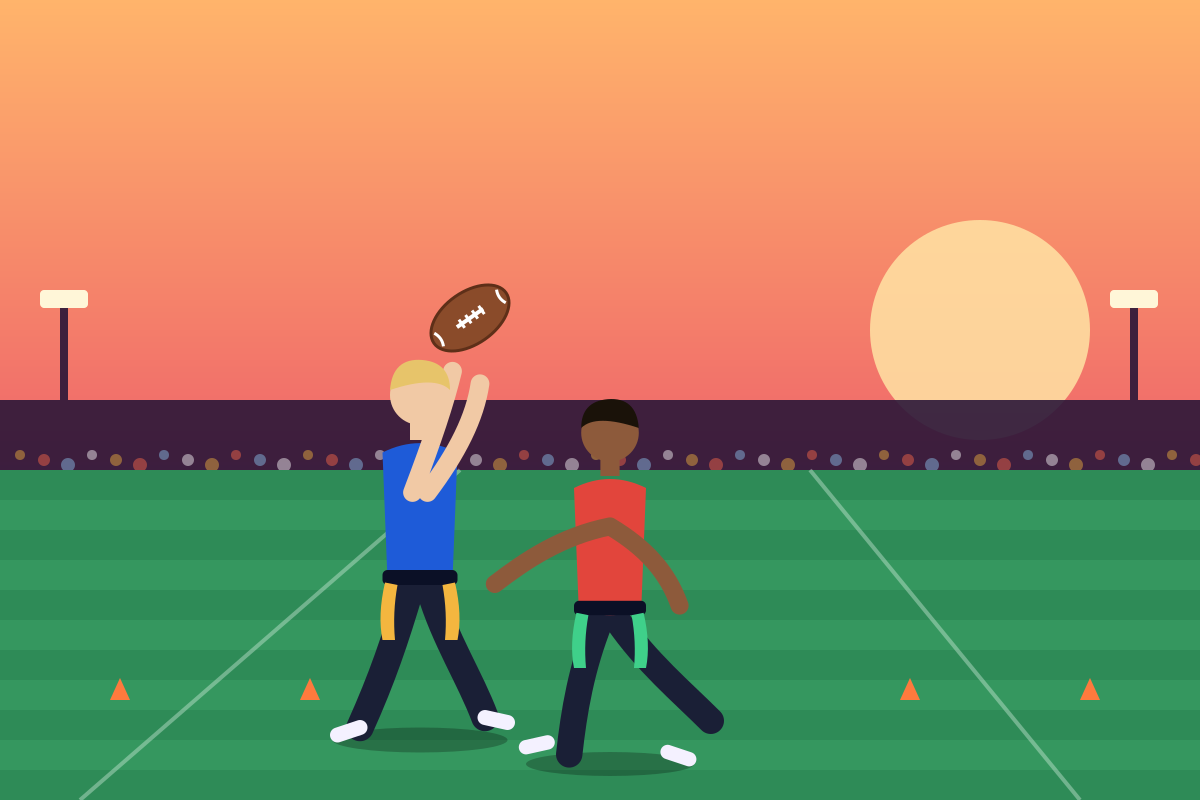
Picture American football, with its dazzling passes, razor-sharp running and chess-like play calling… but without the tackles, the helmets or the shoulder pads. That's flag football. Every player wears a belt with two or three strips of fabric hanging from the hips: the "flags". To stop the ball carrier, you don't bring them down, you simply pull off a flag. The play is over, everyone lines up again, and off you go.
The result is a fast, spectacular and surprisingly accessible game. In the Olympic format it's five-a-side, on a smaller pitch than full American football. There's no offensive line shoving forward and no scrum-like pile-ups: it's all about speed, accurate passing and reading the game. According to the NFL and the sport's international federation (IFAF), around 20 million people play flag football in more than 100 countries. And it's about to go big.
Why everyone will be talking about it in 2028
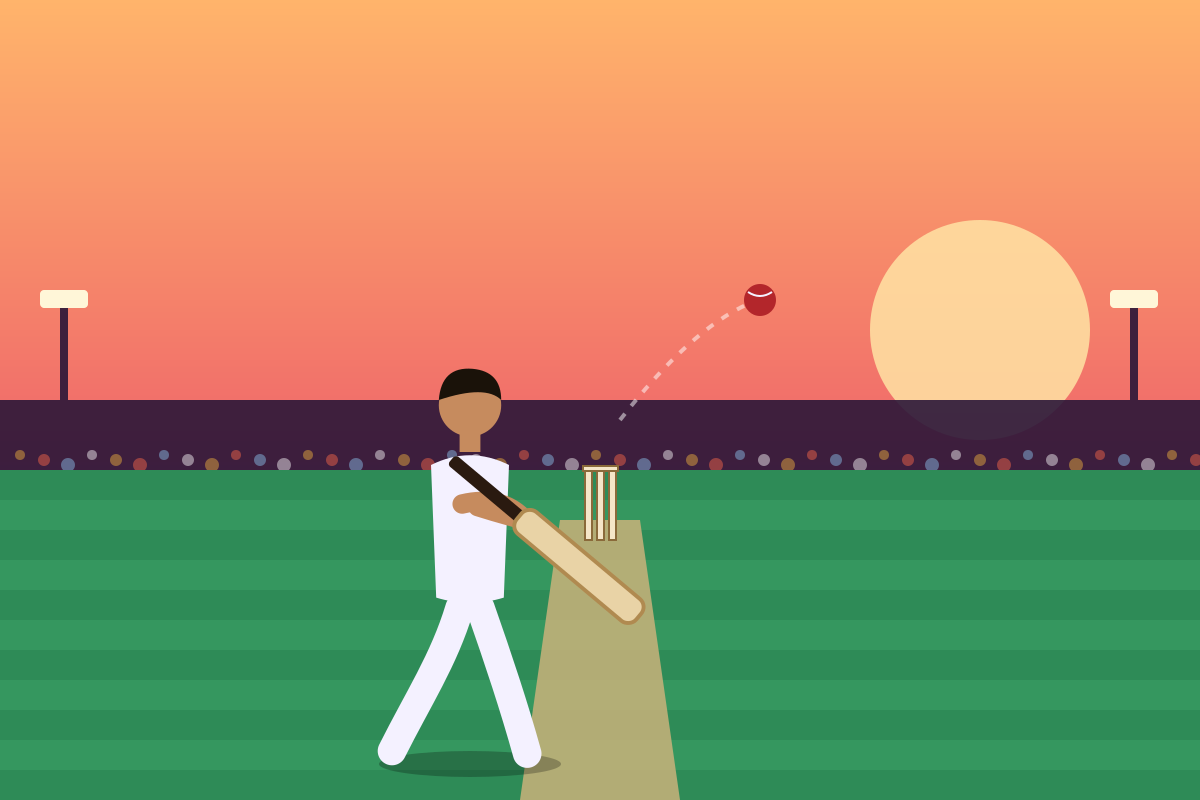
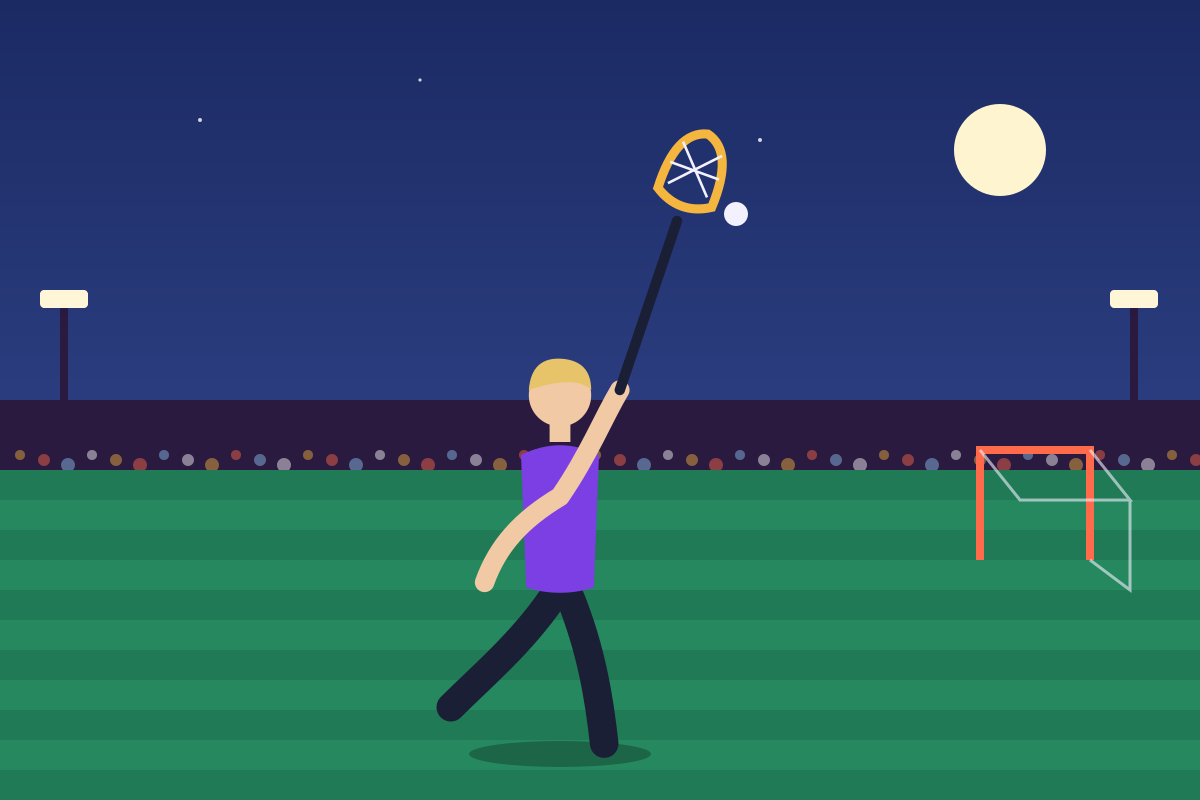
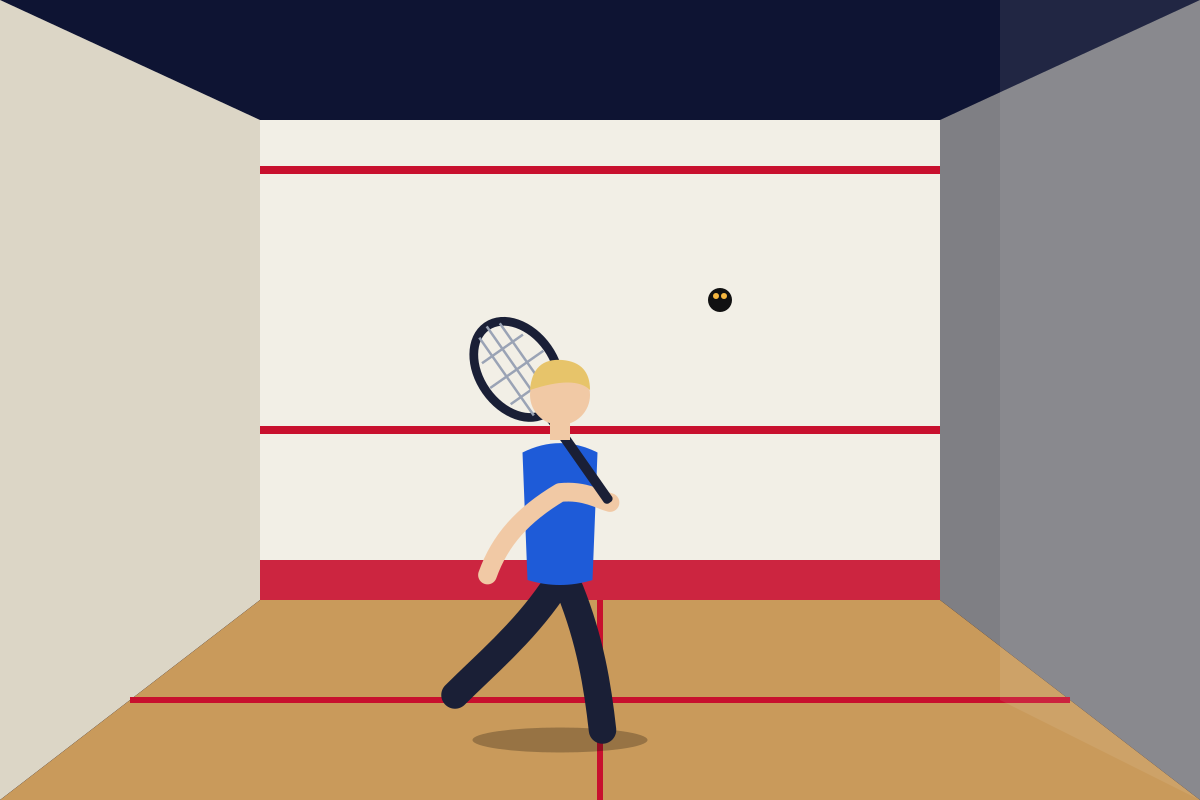
Flag football makes its Olympic debut at the Los Angeles 2028 Games, alongside cricket, lacrosse, squash and the return of baseball and softball. The tournament runs from 15 to 22 July 2028, in the first week of the Games, at BMO Stadium, the 22,000-capacity ground next to the Coliseum in Exposition Park.
- Six men's teams and six women's teams, with ten players per squad.
- NFL players allowed: in May 2025, the league's clubs voted to let their players try out for their national teams.
- A women's final at prime time for us: it's scheduled for Saturday 22 July 2028 at 12:30pm in Los Angeles, which is 8:30pm in the UK. The men's final takes place overnight from Friday to Saturday, at 1:30am UK time.
Who has already qualified?
The World Championships in Düsseldorf, in August 2026, handed out the first tickets. In the men's event, the USA (hosts and world champions for the sixth time in a row), Italy, the beaten finalists, and Canada are through. In the women's event, the USA, new world champions Canada and Mexico have their places. Great Britain came agonisingly close: the women lost the bronze medal game 20-19 to Mexico after a superb comeback, and the men pushed the Americans all the way in the semi-final, losing 26-21 to a touchdown in the final seconds.
The last three places in each tournament will be decided at an Olympic qualifying tournament in spring 2028. Europe will send two men's teams and two women's teams, based on the 2027 European Championships. On their Düsseldorf form, both GB squads are serious contenders for a ticket to LA.
Read next⏱️ Los Angeles 2028 Olympics: the schedule in UK time→The rules in two minutes
Rulebooks vary slightly between competitions (the international federation, social leagues, NFL Flag for young players), but the heart of the game is the same everywhere. Here's what you need to follow a match and get through your first session.
The pitch
In the five-a-side format, the pitch is usually 25 yards wide and 50 yards long, plus two 10-yard end zones, so roughly 23 by 64 metres in total. A line splits the pitch in half: cross it and you earn a new set of downs.
How it works
- No kick-off: every possession starts on the attacking team's own 5-yard line.
- Four attempts (the "downs") to cross halfway, then four more to score. If the offence fails, possession changes hands.
- The centre snaps the ball between their legs to the quarterback, who throws to a receiver or hands off to a team-mate to run.
- A play ends when a defender pulls a flag from the ball carrier, when an incomplete pass hits the ground or when the ball carrier steps out of bounds.
The rules that give flag its flavour
- No-run zones: in the 5 yards before halfway and before the end zone, the offence can't run the ball from the line of scrimmage. They have to complete a pass. This is where games are won and lost.
- The blitz: one defender may charge the quarterback, as long as they start at least 7 yards from the line of scrimmage. That gives the quarterback a few seconds to throw.
- The quarterback can't simply run: under most rulebooks, they can't carry the ball across the line themselves. They have to pass or hand off.
- No flag guarding: the ball carrier mustn't shield their flags with a hand, an arm or the ball. It's the most common beginner's foul.
- No deliberate contact: no tackling, no blocking, no barging. Referees are strict.
Scoring
A touchdown is worth 6 points. The team then attempts a conversion: usually 1 point from the 5-yard line or 2 points from further out. A "safety", when the ball carrier is stopped in their own end zone, earns the defence 2 points. Games are played in two halves of 15 to 20 minutes, depending on the competition.
Why it's the ideal sport to get (back) into exercise
We often watch new Olympic sports thinking "that's one for the youngsters". Flag football is the exception. Here's why so many adults aged 25 to 65 are hooked.
- No tackling, no pile-ups: heavy hits are rare. You can play on Saturday and go to work on Monday without feeling like you've been hit by a bus.
- One session is enough to get it: run, catch, throw, pull a flag. The movements are natural, and the tactics come with time.
- Interval training in disguise: each play lasts a few seconds, followed by a pause to line up again. It's exactly how interval sessions work, only far more fun.
- A position for everyone: the quick ones become receivers, the thinkers become quarterbacks, the alert ones make great defenders. You don't need to be tall or heavy.
- Mixed and sociable: lots of clubs run mixed recreational sessions where you can play as a couple, with colleagues or with friends.
- Very little kit: a belt, a ball, suitable footwear. None of the expensive pads of tackle football.
Where to play in the UK
In the UK, flag football is overseen by the British American Football Association (BAFA), which runs adult and junior competitions and the GB national teams. Many American football clubs have a flag section, some clubs play flag only, and you'll also find social leagues and plenty of university teams. NFL Flag programmes in schools have also introduced thousands of young players to the game.
How to go about it
- Find your nearest club through BAFA's club finder or a simple search for "flag football + your town".
- Ask for a taster session: almost every club is happy to offer one. Many clubs welcome beginners all year round, with new players often joining ahead of the spring and summer season.
- Say what you're after: recreational, just for the fun of playing, or competitive league football. Both exist, often with different training slots.
- Check the formalities: membership, registration and insurance. The club will tell you what's required for your age group.
The good news is that the Olympics will speed up the launch of new sections. Clubs starting out today are looking for keen adults, including people willing to help with coaching or refereeing.
No club near you?
Flag works brilliantly with friends in the park or on a local playing field. It's actually the best way to discover the game before you walk into a club. We explain how further down.
The basic kit
Good news for your wallet: you need very little to get started, and clubs often lend the essentials.
The flag belt
The symbol of the sport. It's worn around the waist with two or three coloured flags attached by clips or magnets. Clubs usually provide belts at training. For a game with friends, a set in two colours, one per team, is all you need.
Belts and flags in two colours, built to international standards: the essential for a game in the park with friends or family.
The ball
You'll get the feel of an American football within minutes, but throwing a clean spiral takes some practice. Your own ball lets you practise in the garden or the park, and it's the best way to improve between sessions. A replica of the official NFL ball is a safe bet: good grip, official size and a sensible price.
A replica of the official NFL ball with a good grip for learning the spiral. Perfect for the park, the garden and training with friends.
Footwear
On grass, moulded-stud boots, like football boots, give the best grip for changes of direction. Metal studs are generally banned. On artificial pitches, astro trainers or AG boots are ideal. For a first session in dry weather, a decent pair of running trainers will do.
The gum shield
It's often required at clubs and tournaments, and it's valuable protection in case of an accidental collision. A boil-and-bite model, moulded to your teeth in hot water, costs very little and is ready in five minutes.
A popular boil-and-bite model that's easy to fit at home and comfortable to breathe and talk in during play.
The little extra: training cones
To mark out a pitch in the park, show halfway and the no-run zones, or practise your routes, a set of flat markers or disc cones is unbeatable. They fit in any bag and work for every sport.
Mark out a pitch in two minutes, show the zones and work on changes of direction.
Positions: find your place
In five-a-side, everyone touches the ball and everyone defends. Roles are still clearly defined.
In attack
- The quarterback: the conductor. They take the snap, read the defence and decide in seconds. Ideal if you have a good arm and a cool head.
- The centre: snaps the ball to the quarterback to start the play, then becomes a receiver like the others.
- The receivers: they run precise paths (the "routes") to get open and catch the ball. The dream position for the quick ones.
In defence
- The rusher: starts 7 yards back and charges the quarterback to put them under pressure.
- The cover defenders: they follow receivers or guard a zone, intercept passes and pull flags.
- The safety: the last line of defence, set deeper to stop long passes.
Your first session: what to expect
A taster session usually lasts between 90 minutes and two hours. It often looks like this:
- Warm-up (15 minutes): an easy jog, running drills, ankle and hip mobility, then a few strides.
- Passing and catching: how to hold the ball, throw a spiral and catch with your hands, making a diamond shape with your thumbs and index fingers.
- Routes: straight runs, cuts and diagonals. Exactly the paths the quarterback expects.
- Flag pulling: square up to the ball carrier, keep your feet active and aim for the hip rather than diving in.
- The game: the best bit. After a few plays, the rules suddenly make perfect sense.
Beginner's mistakes to avoid
- Skipping the warm-up: sprints and changes of direction put strain on hamstrings, calves and ankles. Fifteen minutes of warming up prevents a lot of pulled muscles.
- Going flat out in your first session: if you're returning to sport, play at 70% the first time. The urge to impress is the number one cause of injury.
- Guarding your flags: the reflex to protect your hips with a hand is natural, but it's a foul.
- Wearing a long, baggy top: the flags must stay clearly visible. Tuck your T-shirt into your shorts.
- Forgetting to drink: bring a water bottle, especially in summer.
If you're coming back to exercise after a long break, or you're over 40 with any health history, it's a good idea to check in with your GP before you start.
Organising a game with friends in the park
You don't need to wait for a club to try flag. All it takes is a ball, a few belts and a patch of grass. Here's a simplified version that's easy to set up with family or friends.
- The pitch: about 20 to 25 metres wide and 50 to 60 metres long, marked with cones. Show halfway and both end zones.
- The teams: anything from four-a-side to six-a-side, depending on numbers. Make the teams mixed and balanced.
- Simplified rules: four downs to cross halfway, four to score, no contact and a blitz from 7 paces. You can leave out the no-run zones at first.
- Rotation: change quarterback every possession. Everyone throws, everyone catches.
- Length: two 15-minute halves with a drinks break in the middle.
On a Sunday afternoon, it's the perfect way to bring three generations together: the kids run everywhere, the parents play quarterback and the grandparents referee without mercy. And it's a great excuse to settle down in front of the Games together afterwards.
A quick glossary for watching a game
- Down: an attempt. The offence has four to reach the next line.
- Snap: the hand-back from the centre to the quarterback that starts the play.
- Route: the path a receiver runs.
- Rush or blitz: a defender charging the quarterback.
- Interception: a pass caught by the defence, who win the ball back.
- Pick six: an interception returned all the way for a touchdown. The moment a stadium leaps to its feet.
- No-run zone: the area where only passing is allowed.
Watching Olympic flag football from the sofa
Once you've played a session yourself, you'll never watch the Olympic tournament the same way again. A few things to look out for:
- Watch the no-run zones: when the offence gets there, the whole defence knows a pass is coming. A fascinating tactical battle.
- Count with the quarterback: against a blitz, they have barely two or three seconds to throw.
- Fourth downs: the offence's last chance. The most nerve-shredding moments of the game.
With matches in the Los Angeles afternoon and evening, part of the tournament will fall in the middle of the night in the UK. But the women's final on Saturday 22 July at 8:30pm is perfect for a family evening. And for the late games, our guide to the Olympic all-nighter will help you make it to the final whistle.
Read next🌙 How to host an Olympic all-nighter with friends→Flag football isn't a one-Games wonder. Mixed, non-contact, accessible and spectacular, it's here to stay, and Los Angeles 2028 is only the beginning. The best time to start is now: you'll have a season's head start to cheer on Great Britain like a true expert.
Frequently asked questions
What is flag football?
Flag football is a non-contact version of American football. Every player wears a belt with flags attached; instead of tackling the ball carrier, a defender pulls off one of their flags to end the play. At the Olympics it is played five-a-side.
Is flag football in the 2028 Olympics?
Yes. Flag football joins the programme at the Los Angeles 2028 Olympic Games, with a men's and a women's tournament of six teams each, from 15 to 22 July 2028.
Can I start flag football at 40 or 50?
Yes. With no tackling, heavy collisions are rare, you can learn the rules in a single session and many clubs welcome adult beginners in recreational groups. A proper warm-up and a gradual return to exercise are still essential, as with any sport built on sprints and changes of direction.
What kit do I need to start flag football?
Sportswear, moulded-stud boots or running trainers on dry ground, a flag belt (often lent by the club) and a gum shield, which is frequently required. The club provides balls at training.
Is flag football mixed?
There are men's, women's and mixed competitions. At the Olympics, men and women have separate tournaments with the same number of teams, making flag one of the most gender-equal sports on the programme.
Where can I find a flag football club in the UK?
Flag football in the UK is overseen by the British American Football Association (BAFA). Many American football clubs run flag sections, and there are flag-only clubs, social leagues and university teams. The easiest way in is to ask your nearest club for a taster session.
Sources
Information checked against the following sources (last checked: 22 November 2026):
- LA28, official website of the Los Angeles 2028 Games
- IFAF, the international federation for American football and flag football
- British American Football Association (BAFA)

Passionate about new tech and sport, we created PodiumSofa to bring the two together. We carefully select the screens, headphones and settings we recommend, and check every time against official sources. Find out more
Spotted a mistake or something out of date? Email us at contact@podiumsofa.eu and we'll fix it quickly. · How we choose
Was this page helpful?
Anonymous: no cookies, no IP address stored. Please don't include any personal details.
Some links on this page are Amazon affiliate links and are labelled as such. If you buy through them, the site may earn a commission at no extra cost to you. As an Amazon Associate we earn from qualifying purchases.