An Olympic comeback 128 years in the making
Here's a great pub quiz question: when was cricket last an Olympic sport? The answer is Paris, 1900, when a single two-day match was played between Great Britain and France. Britain won, and then the sport disappeared from the Games for well over a century. In 2028, it's back, in Los Angeles.
This comeback is no accident. Cricket is one of the most watched sports on the planet, with huge followings in India, Pakistan, Australia, South Africa and, of course, the UK. And its modern format, T20, is made for television: three hours of play, big hitting and drama right down to the last ball.
Cricket at the LA 2028 Olympics
- The format: T20, with six men's and six women's teams and squads of 15 players.
- The venue: a temporary stadium at the Fairgrounds in Pomona, around 50 kilometres from downtown Los Angeles.
- The dates: the tournament starts on 12 July, before the opening ceremony. The women's final is scheduled for 20 July and the men's for 29 July.
- Perfect timing for us: the first match of the day starts at 9am in Los Angeles, which is 5pm in the UK. The finals will be on in the early evening, just in time for dinner.
Will Great Britain be there?
The women already have their ticket: Australia, India, South Africa and Great Britain, qualifying through England's results, booked their places at the 2026 Women's T20 World Cup. In the men's event, the highest-ranked eligible teams from Africa, Asia, Europe and Oceania in the T20I rankings on 31 December 2026 will qualify, so England's ranking will decide whether a GB men's team goes straight through. The USA, as hosts, must be in the world's top 15 to take their place, and an Olympic qualifier in 2027 will decide the final spot in each event.
One intriguing twist: at the Olympics, the team plays as Great Britain, not England. That opens the door, in principle, to players from Scotland and Wales too.
Read next⏱️ Los Angeles 2028 Olympics: the schedule in UK time→The rules, without the jargon
Cricket has a reputation for being impenetrable. In reality, the basic idea fits in a few lines, especially in T20.
The basics
- Two teams of eleven take turns. One side bats (scoring runs) while the other bowls and fields. Then they swap.
- In the middle of the field is a strip of closely mown grass, the pitch, 22 yards long, with a wicket at each end: three stumps topped by two small bails.
- The bowler delivers the ball, usually bouncing it, towards the stumps. The batter defends the wicket and tries to hit the ball as far as possible.
How to score
- By running: after a shot, the two batters swap ends. Each completed run scores one.
- A four if the ball crosses the boundary after touching the ground.
- A six if it clears the boundary without bouncing. It's the signature shot of T20, the equivalent of a home run in baseball.
How a batter gets out
- Bowled: the ball hits the stumps.
- Caught: a fielder catches the ball before it touches the ground.
- Run out: a fielder hits the stumps with the ball before the batter reaches the crease.
- LBW (leg before wicket): the ball hits the batter's leg when it would otherwise have hit the stumps. The trickiest rule in the book.
The T20 format
Each side has 20 overs, sets of six deliveries, to score as many runs as possible, or until ten of its batters are out. Then the other side tries to beat that total. Most runs wins. A match lasts around three hours, and the drama usually builds in the final overs, when the chasing side has to take every risk.
Why take up cricket?
- A sport for any age: teenagers play alongside fifty-somethings. It's all short sprints, throwing and concentration, with no contact.
- A real game of strategy: field placings, bowling changes, risk and reward. Chess fans love it.
- The social side: tea, a drink in the clubhouse, a chat with the opposition. A cricket club is a community.
- Long summer evenings: few things beat an evening game as the sun goes down.
- Quick wins: you'll middle your first few shots in your very first session.
Where to play in the UK
Few countries make it easier to play cricket than the UK. The England and Wales Cricket Board (ECB), Cricket Scotland and Cricket Ireland in Northern Ireland oversee thousands of clubs, from village greens to city grounds, and most have teams at several levels.
Softball cricket: the perfect way in for adults
If the thought of a hard ball whistling past your ears puts you off, look for softball cricket. Played with a soft ball and no need for pads or helmets, it has become a hugely popular way for adults, and especially women, to try the game in a relaxed, social setting. Many clubs run softball sessions and festivals in the summer, and they're ideal for complete beginners.
How to go about it
- Find a club through the governing body's club finder or a quick search for "cricket club + your town".
- Plan for spring: the outdoor season runs from April to September. Some clubs offer winter nets indoors.
- Ask for a taster session: kit is usually provided. Wear sportswear and trainers.
- Check the formalities: membership and match fees vary from club to club.
No club nearby? Cricket works beautifully in the park, the garden or on the beach with a soft ball. And it's the best way to persuade a few friends to come along to the club with you.
Kit for beginners
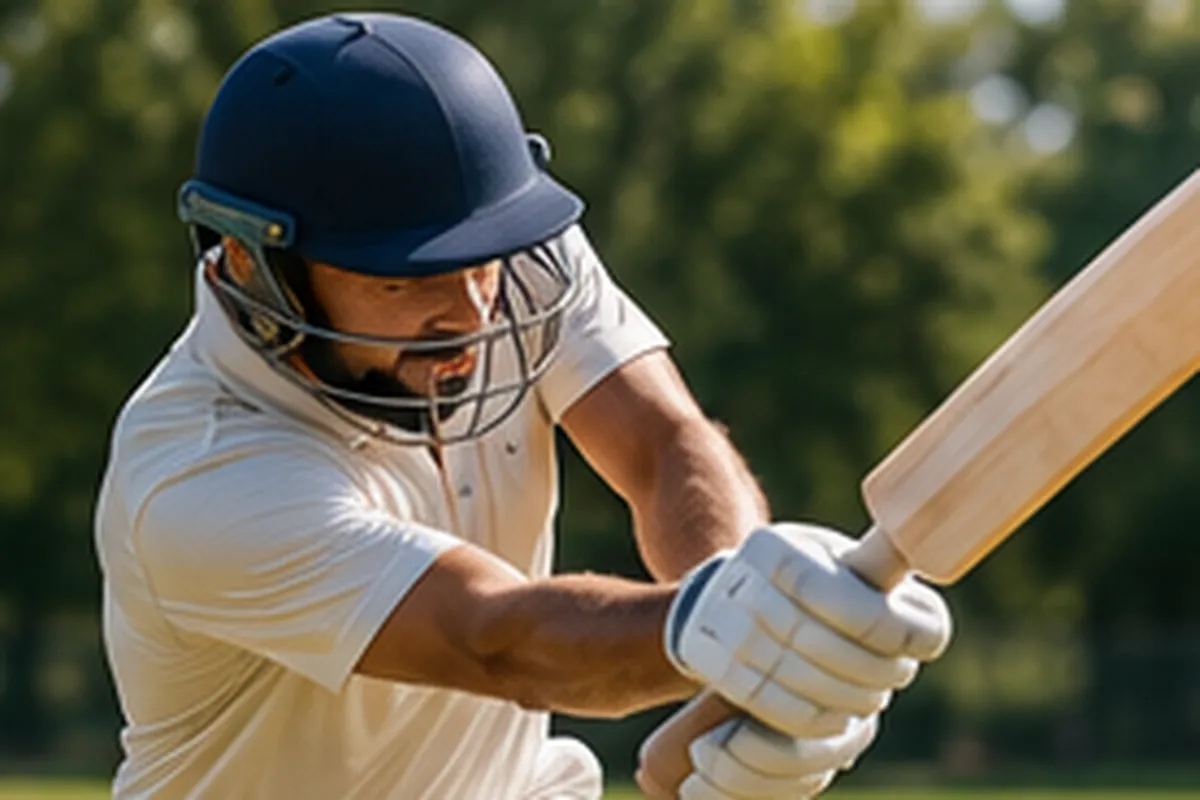
Hardball cricket is played with a leather ball, hence the protective kit: helmet, pads, gloves, box. But you don't need any of that to get started.
At the club
Clubs lend bats and protective kit to beginners. Just bring comfortable sportswear and trainers. If you stick with it, your own bat and spiked shoes can come later.
In the garden, park or on the beach
A garden cricket set with a wooden or plastic bat, two sets of stumps and a soft ball is all you need for family games. With a soft ball, or just a tennis ball, it's perfectly safe for children too. And beach cricket is a proper British summer tradition.
Bat, stumps and a soft ball: everything for a first family match in the garden, the park or on the beach.
Safer than a hard ball and perfect for learning to hit and catch without fear.
How to organise a garden or beach game
Here's a simplified version, perfect for a summer afternoon with friends or family.
- The pitch: set the two sets of stumps about 15 metres apart (closer for children). Mark a boundary with cones or natural markers.
- The teams: three to six players a side. Everyone bowls, everyone bats.
- The format: five overs of six balls per side. Each batter stays in until they're out, then the next one comes in.
- Scoring: one run per run between the stumps, four if the ball rolls over the boundary, six if it clears it.
- House rule: anyone who's out can come back in at the end once everyone has batted. The main thing is that everyone gets a hit.
Within an hour, everyone understands the game. And in July 2028, those same garden cricketers will watch the Olympic final like seasoned experts, at teatime.
Your first club session
- Warm-up: a jog, shoulder and hip mobility, a few sprints. Shoulders work hard, whether bowling or batting.
- Holding the bat: grip, stance and keeping your eyes on the ball.
- First shots: first with the ball gently thrown underarm, then with a bounce.
- Bowling: in cricket, your arm must be straight as you release the ball. It's an unusual action that takes some practice.
- Catching: taking high catches, a key skill for getting batters out.
- A short game: often in small teams so that everyone bats and bowls.
Beginner's mistakes
- Closing your eyes on impact: a natural reflex. With a soft ball, you soon learn to watch it onto the bat.
- Swinging too hard, too soon: in cricket, timing beats power. The best shots often look effortless.
- Bending your arm when bowling: that's a no-ball, or worse. Work on the action slowly before you look for pace.
- Skipping the shoulder warm-up: repeated throwing tires the joint quickly.
A quick glossary for watching a match
- Over: six deliveries from the same bowler.
- Run: a point, scored by running between the wickets.
- Wicket: the stumps, but also the dismissal of a batter ("taking a wicket").
- Boundary: a four or a six.
- Innings: a team's turn to bat.
- Duck: a batter out without scoring. The most dreaded word in cricket.
- Yorker: a delivery aimed right at the batter's toes. Deadly at the death.
Watching Olympic cricket from the sofa
With the first match of the day starting at 5pm UK time, cricket will be one of the easiest Olympic sports to watch live from Britain. A few things to look out for:
- Read the scoreboard: the score is shown as runs for wickets (150 for 4, say) plus the number of overs bowled.
- Follow the required run rate: the runs per over the chasing side needs. The higher it climbs, the bigger the risks.
- Savour the death overs: the last few overs decide everything, between sixes and yorkers.
Olympic cricket will mainly be shown on the services that carry every event: our guide to watching LA 2028 in the UK explains how to see it.
Read next📺 How to watch the LA 2028 Olympics in the UK→And if you catch the bug, cricket is a sport you can play, and keep improving at, for decades. Its Olympic return in 2028 is the perfect excuse to start.
Frequently asked questions
Is cricket in the 2028 Olympics?
Yes. Cricket returns at the Los Angeles 2028 Olympic Games with a men's and a women's tournament of six teams each, played in the T20 format (20 overs per side). Matches will be held in Pomona, around 50 kilometres from Los Angeles.
When was cricket last in the Olympics?
At the Paris Games in 1900. Only one match was played, between Great Britain and France, and Great Britain won. Its return in 2028 comes 128 years later.
How long does a T20 cricket match last?
About three hours. Each side has 20 overs, sets of six deliveries, to score as many runs as possible. It's the shortest and most spectacular format of international cricket.
Can I start playing cricket as an adult?
Yes. Many clubs welcome adult beginners, and softball cricket formats let you learn the game without facing a hard ball. Cricket is mainly about coordination, concentration and short bursts of effort, which makes it accessible at any age.
What kit do I need to start cricket?
For a first session, almost nothing: clubs lend bats, balls and protective kit. For the garden or the beach, a set with a bat, stumps and a soft ball is enough. Pads, gloves and a helmet are only needed once you play with a hard ball.
Will Great Britain play cricket at LA 2028?
The GB women's team has already qualified, thanks to England's results at the 2026 Women's T20 World Cup. In the men's event, the highest-ranked eligible European team in the T20I rankings on 31 December 2026 qualifies, with a final place decided at an Olympic qualifier in 2027.
Sources
Information checked against the following sources (last checked: 22 November 2026):
- ICC: dates confirmed for cricket's Olympic return
- ICC: the Olympic qualification pathway
- England and Wales Cricket Board (ECB)

Passionate about new tech and sport, we created PodiumSofa to bring the two together. We carefully select the screens, headphones and settings we recommend, and check every time against official sources. Find out more
Spotted a mistake or something out of date? Email us at contact@podiumsofa.eu and we'll fix it quickly. · How we choose
Was this page helpful?
Anonymous: no cookies, no IP address stored. Please don't include any personal details.
Some links on this page are Amazon affiliate links and are labelled as such. If you buy through them, the site may earn a commission at no extra cost to you. As an Amazon Associate we earn from qualifying purchases.